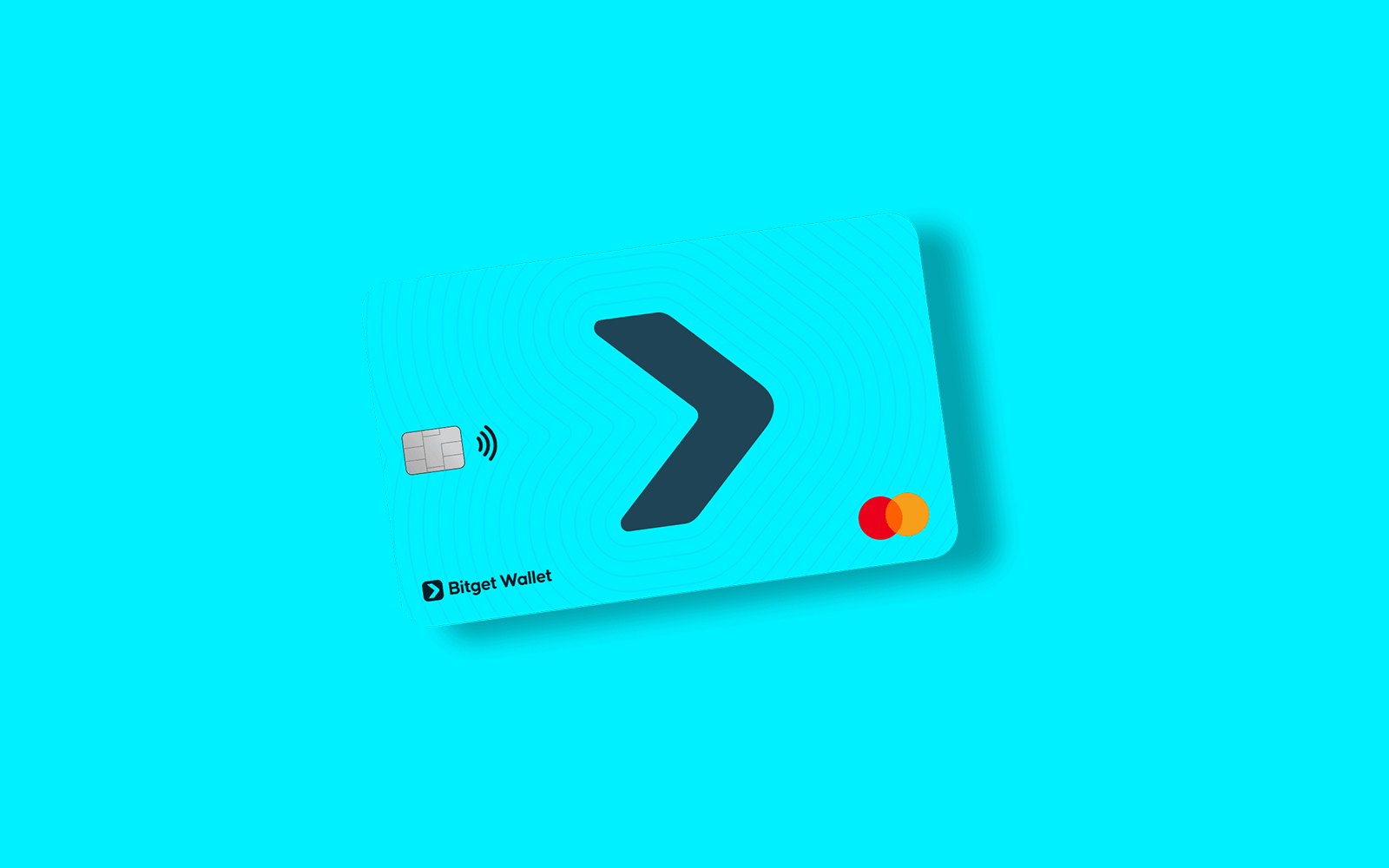
U-card services seem straightforward on the surface. Users deposit USDT or USDC, the platform converts it to fiat currency, and then links it to a Visa or Mastercard card for online and offline spending. Customers’ first reaction is usually: isn’t this just a “cryptocurrency bank card”?
But those who have actually worked with it know that U-cards are never just about a single card. It’s a complex business comprised of a payment chain, card-issuing partnerships, cryptocurrency deposit and withdrawal arrangements, an anti-money laundering system, and user agreements and risk isolation mechanisms.
It appears simple because the front-end experience is lightweight. It’s complex because no step in the back-end can be easily compromised.
U-Card isn’t about “issuing your own cards”; most projects are simply card project managers.
Many project teams claim to “issue U-Cards,” but upon closer examination, it becomes clear they are neither card organization members, nor licensed issuing banks, nor institutions capable of assigning their own BINs (Bank Identification Numbers).
In reality, most startups follow a collaborative approach: finding issuing banks, BIN sponsors (usually licensed institutions with card-issuing qualifications), card processors, KYC service providers, and crypto exchange or clearing partners to jointly build a card product.
This means that project teams can’t simply issue cards at will. To enter the card organization ecosystem, you need to conduct due diligence with partners, meet card-issuing rules, accept transaction monitoring requirements, and clearly demonstrate your user base, funding sources, business scenarios, and risk control.
Many believe the core of the U-Card business is “finding a channel.” But relying solely on channels makes the business fragile. If your partners discover that your customer base is of poor quality, has an unusually high number of transactions, high regional risk, a high complaint rate, or unclear sources of funds, the channel may be shut down at any time.
The biggest fear for U-card entrepreneurs is not having no partners at the beginning, but finding themselves completely dependent on them after launch.
The design of cryptocurrency and capital flows directly determines regulatory risk.
The U-Card project must first answer one question: Whose wallet does the stablecoin deposited by users end up in? Who is responsible for exchanging it for fiat currency? Who holds the fiat currency? Who tops up the card account? Who is responsible for repaying the user’s balance?
This is not a technical issue, but a legal one.
If the platform only provides the front-end interface, and the user’s crypto assets go directly to a licensed exchange or custody institution, and the fiat currency is also deposited into the card account by a partner, then the platform may be closer to a technology service provider or project manager.
However, if the user’s USDT first goes into a wallet controlled by the platform, and the platform then handles the unified exchange, settlement, and top-up of the user’s card account, then the platform may have already substantially intervened in fund transfer, exchange, customer asset holding, or payment services. At this point, the platform can no longer downplay its role as merely providing “technical services.”
Regulators look at the business, not the packaging. A contract stating “we do not provide financial services” is useless; what they really need to see is who receives the money, who controls the cryptocurrency, who exchanges currency, who settles accounts, and who is obligated to pay the user’s balance. The problem with many U-card projects lies here: the front-end claims to be a tool, but the back-end keeps control of the funds and coins.
KYC cannot be limited to account opening; continuous monitoring is necessary throughout the transaction process.
U-card business inevitably involves KYC (Know Your Customer) and AML.
Many project teams say, “We have KYC; users are verified before opening a card.” However, in the U-card scenario, KYC at account opening alone is far from sufficient. Risks occur not only during account opening but also during top-ups, redemptions, spending, withdrawals, refunds, chargebacks, and cross-border transactions.
A user might open an account with a clean identity but top up funds from a high-risk address; they might also suddenly top up a large amount after a small test; card spending might be concentrated at high-risk merchants such as gambling, adult entertainment, gray market activities, and virtual goods cash-out schemes; and there might be multiple users sharing accounts, bulk card openings, abnormal IP addresses, abnormal devices, and frequent changes in account binding. All of these need to be monitored.
For U-card projects, compliance is not just “scanning a passport during registration,” but continuously identifying user behavior. Especially when projects involve cryptocurrency deposits, on-chain fund source screening, sanctions list matching, high-risk address identification, transaction limits, abnormal freezes, and manual review should all be incorporated into product and operational processes. Otherwise, once the cards are issued, the risks are also issued.
Project teams can’t just talk about “user experience”; they also need to discuss “boundaries of responsibility.”
The most attractive aspect of the U-Card product is its seamless user experience: top-up, redemption, swiping, cashback, free withdrawals, and global spending.
However, lawyers examining U-Card projects are most concerned not with these selling points, but with the boundaries of responsibility.
For example, who is responsible for explaining when a user’s card is frozen?
Does the platform compensate if a partner refuses a transaction?
Who bears the loss if stablecoins are delayed?
Is the platform obligated to recover funds sent to the wrong address on the blockchain?
What happens to user balances when card organizations, issuers, or payment channels adjust their rules?
Can the platform continue to fulfill its obligations if a partner suddenly terminates service?
Does the platform have the right to suspend, freeze, or refuse service to users whose accounts are deemed high-risk?
If these issues aren’t clearly addressed in the user agreement, card service terms, risk warnings, and cooperation agreements, the project team will be in a very passive position later on.
Many U-Card teams initially focus on UI, fees, and user acquisition, neglecting the agreements. When cards are frozen, balance disputes arise, users complain, channels are shut down, and regulators inquire, they realize they don’t even have a single, definitive statement about their responsibilities.
The true compliance capability of U-Card lies in disassembling and reassembling its business.
U-Card isn’t inherently unfeasible. On the contrary, the combination of stablecoin payments and card networks represents a highly promising direction for the next few years. Traditional card organizations, payment institutions, and crypto infrastructure companies are all moving in this direction. However, the more promising a business is, the less likely it is to be launched hastily.
A truly sustainable U-Card project must clarify at least a few key questions:
Which countries and regions are you targeting?
Do you handle user funds or crypto assets?
Do you participate in exchanges?
What are your relationships with issuing banks, BIN Sponsors, processors, KYC service providers, and crypto exchange service providers?
How should the user agreement disclose third-party services, freeze rules, refund rules, and asset risks?
What happens to user rights when partners cease services?
Does the platform reserve the right to adjust or discontinue services when regulatory rules change?
Without addressing these issues, U-Card is merely a seemingly attractive front-end shell.
A truly valuable U-card project isn’t one that simply includes “USDT + Visa card” in its business plan. It’s one that weaves together a cohesive, explainable, and due diligence-compliant chain encompassing licenses, partners, cash flow, cryptocurrency flow, KYC, AML, user terms, and contingency mechanisms. The market is never short of people wanting to create U-cards; what it lacks are those who can run this business reliably.