
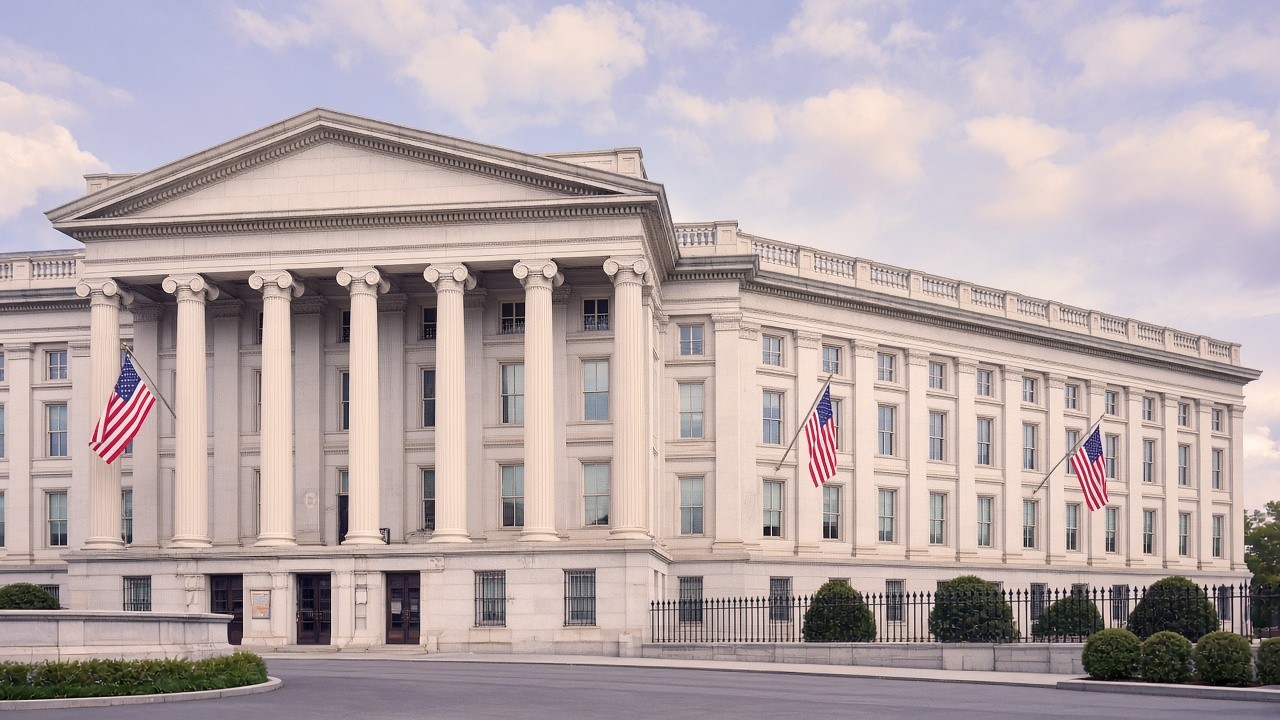
On October 9, U.S. Treasury Secretary Scott Bessent hired Dr. Judy Shelton as an adviser in the Office of the Secretary. Her brief is to counsel on exchange-rate policy; the official wording also includes a focus on assessing China’s financial conditions. The adviser role does not require Senate confirmation, so it will not replay the congressional blockade she faced years ago when nominated to the Federal Reserve Board.
What this outlet is watching is not personnel gossip but the signal: a scholar long associated with “sound money” and a “dependable dollar” has entered the department that handles exchange-rate reports and the accounting of gold reserves. Below, her résumé, her core positions, her network, and several outside guesses about what she may do at Treasury.

1. Who Shelton Is
Shelton is 71, born in Los Angeles, with a doctorate in business administration from the University of Utah. She began her academic career at Stanford’s Hoover Institution, early on studying how Western capital shaped the Soviet economy. In 1989 she published The Coming Soviet Crash, arguing from fiscal analysis that the Soviet system could not hold; two years later the USSR dissolved and her profile rose. Money Meltdown (1994) turned to floating exchange rates and central-bank discretion, calling for an international monetary system re-anchored to gold. That line has barely shifted for more than three decades; her 2024 book Good as Gold reads as a summation.
2. Five Core Positions
From her public writings and speeches, Shelton’s views can be boiled down to five points:
- The dollar should again be “sound money.” She more often says “dependable dollar”: not simply a strong dollar or a weak one, but a unit of account that holds across time and borders. She argues inflation has already eroded the dollar’s store-of-value role; this May she cast reliable money as a constitutionally protected property right — when hard-earned cash quietly shrinks under inflation, that is an unannounced transfer of wealth.
- Gold is the authoritative yardstick for fiat value. Her most-cited proposal is “Treasury Trust Bonds”: long-dated Treasuries that, at maturity, let holders take face value in dollars or a pre-agreed quantity of gold, collateralized by the roughly 261 million ounces on the U.S. books that have been carried for more than fifty years at $42.22 an ounce.
- The Fed should slim down: shrink the balance sheet and stop paying interest on bank reserves. She especially opposes a 2% annual inflation target — a yardstick that shrinks at least 2% a year is, in her framing, a systematic hit to purchasing power.
- Question the outer bounds of Fed independence. In 2011 she called the Fed “almost a rogue agency”; in 2019 she said she could not find the word “independence” in the Federal Reserve Act and asked why a central bank is needed at all. She is not calling for abolition so much as tighter constraints.
- Trade policy should put counterparties’ exchange rates first. She sees tariffs as slow and limited; competitive currency depreciation itself is an invisible trade barrier, and “currency manipulation” is one of the arguments she often uses when pushing a sound-money agenda.
None of this is uncontested. When she was nominated to the Fed in 2019, more than a hundred economists (including seven Nobel laureates) and seventy-nine former Fed officials signed separate letters calling her views extreme and ill-considered. Another oft-cited inconsistency: under Obama she criticized rates that were too low and money creation that was too loose; in Trump’s first term she urged rate cuts; this spring she still spoke of monetary conditions as somewhat tight. Critics say her stance swings with the party in power.
3. Trump, Bessent and Kevin Warsh
Shelton’s ties to Trump run deep: economic adviser on the 2016 campaign, lead adviser on the Treasury transition team after the first election, then U.S. executive director at the European Bank for Reconstruction and Development, chair of the National Endowment for Democracy’s board, and a 2019 Fed Board nomination.
Where they publicly align: distrust of how the Fed currently operates, a preference for lower rates, and a belief that some trading partners have gained at America’s expense on exchange rates. The main split is dollar strength: Trump more often pushes a weaker dollar to help exports; Shelton insists on a dependable dollar — not necessarily absolutely strong, but in her view a move toward reliability would often leave the dollar looking stronger versus other fiat currencies. How that tension is reconciled is still something to watch, not something settled.
With Bessent the link is more direct: adviser and secretary. Last year Bessent wrote critically of the Fed’s “mission-creep” monetary policy and called for a thorough check-up of the institution; this summer at the Economic Club of New York he spoke of “Hamiltonian finance,” stressing high tariffs, domestic production and self-sufficiency in critical industries. A Hamiltonian fiscal agenda needs a relatively neutral settlement asset; Shelton’s idea of partially anchoring Treasuries to gold fits that narrative on paper. Bessent also floated “monetizing the asset side” of the U.S. balance sheet last year, then denied a path through revaluing gold reserves — yet bringing a long-time advocate of gold-reserve revaluation into the secretary’s office invites markets to read the two together. That remains conjecture, not enacted policy.
Shelton and Kevin Warsh are something of half-classmates: both spent time at Hoover, both criticize the Fed, both favor balance-sheet runoff. Warsh’s line last year was roughly: print less, bring the balance sheet down, leave fiscal accounts to Treasury, and rates can fall sharply; he also floated a new Treasury–Fed accord “like 1951.” After Warsh’s Senate hearing, Shelton’s interview menu was nearly isomorphic: sell assets to shrink the balance sheet, lower the policy rate so that rates neither stimulate nor suppress — they only reflect the market.
One reading is that parking Shelton at Treasury is a personnel springboard — waiting for a Fed seat to open. Powell’s Board term was set to run through January 2028; whether seats such as Lisa Cook’s or Barr’s shift because of “for cause” removal litigation still depends on the courts. Another reading: Treasury already gives Shelton enough room for her core agenda, so a Fed seat is not required. Neither claim has official confirmation.

4. What She Might Do at Treasury
Treasury’s official brief is short: advise on exchange-rate policy, with a focus on assessing China’s financial conditions. Shelton is not known primarily as a China specialist, so outside readings of the brief proliferate. One common guess: pairing FX with China is preparation to move the front line of later trade talks from tariffs toward exchange rates. China’s central bank has also issued a white paper arguing it does not manipulate its currency — the two sides already have opposing public narratives.
Shelton has stressed for years that the United States cannot let China move first on “re-linking money to gold”; the dollar must hold the lead as reliable money if its international role is to stay intact. From that, outsiders sketch three roles for her at Treasury:
- The FX report and the “manipulation” label. Twice a year Treasury sends Congress an exchange-rate report that can designate a trading partner a currency manipulator. One market guess is that her near-term priority may land on the second-half report — including whether to harden language on China’s exchange rate and financial conditions. That is still outside speculation, not a published action list; whether and how any such language hardens cannot be treated as settled fact.
- Opening a policy window for a partial dollar–gold link. Revaluing U.S. gold reserves on the books needs Congress to change the law; so does issuing gold-redeemable Treasuries. Official gold has long been carried near $42 an ounce, far below market. Marking books to market would strengthen the “anchor narrative” for ultra-long Treasuries — but that hinges on legislation, not a single adviser’s memo.
- Tightening “fiscal lead, central bank follow” coordination. Shelton wants the Fed to stop paying interest on reserves, shrink the balance sheet sharply and cut rates. If reserve interest stops, money the Fed no longer pays commercial banks can, in accounting terms, show up as remittances to Treasury; the political line often calls that “cutting a subsidy to big banks.” If it ever landed, it would be a transfer from the banking system to Treasury — operationally hard, with large knock-ons, and still only an advocacy position.
5. This Outlet’s Take
Bringing a hard-money theorist into Treasury is itself a strong signal: the FX report, gold-reserve accounting, and the boundary between Treasury and the Fed may all be put back on the table. How the dollar and Treasuries are priced next is worth tracking through public filings and personnel moves — not through a single narrative bet.
Shelton made her name spotting the Soviet fiscal hole; she now enters a heavily indebted U.S. Treasury as an adviser, with a brief that names China’s financial conditions. The historical rhyme is easy to over-read; rhyme is not evidence. An adviser can write memos and shape report language; turning advocacy into law and market structure still has to clear Congress, execution detail, and the market’s own pricing test.